MBA Chula Global Business Experience | English 20 | Tokyo 2026
MBA Chula Global Business Experience | English 20 | Tokyo 2026
Day 1: Social Impact & Regeneration
In the morning, our study trip began with a warm welcome from Professor Satoshi Hirose, Dean of GLOBIS University, followed by an inspiring session on “Creating Hope with Social Entrepreneurs: The KIBOW Impact Investment Fund,” by Professor Suzuka Kobayakawa.
Following the Great East Japan Earthquake in 2011, the KIBOW Foundation was established to support social entrepreneurs in transforming their passion into sustainable businesses. As shared by a KIBOW leader, while a strong business plan is important, resources and supporters are often drawn to one’s Kokorozashi — a personal mission that unites one’s passion and professional skills to create positive change in society, as defined by GLOBIS.
Through examples of KIBOW Impact Investing investees, such as Ai San San Takushoku, which addresses elderly loneliness through nutritious meal delivery, and Rapport Hair Group, which supports working mothers through flexible employment, students learned how businesses can address social issues in practical and sustainable ways. They also explored how stakeholder mapping can help visualize key actors, interests, and relationships needed to mobilize resources and create meaningful social impact.
In the afternoon, students visited Ishizaka Inc., an industrial waste treatment company in Saitama that has transformed itself from a “recycling company” into a “regeneration company.” Students learned how Ishizaka rebuilt public trust in the waste management industry by shifting from NIMBY — “Not In My Backyard” to YIMBY — “Yes In My Backyard.”
The visit highlighted Ishizaka’s Zero Waste Design, advanced waste separation processes, products made from sorted and processed waste, such as woodchips and crushed stones, and Satoyama regeneration initiatives. Students learned how sustainability goes beyond recycling; it also involves transparency, community engagement, biodiversity conservation, and the creation of long-term value for both society and the environment.
Day 2: Soft Power, Manga & the Business of IP
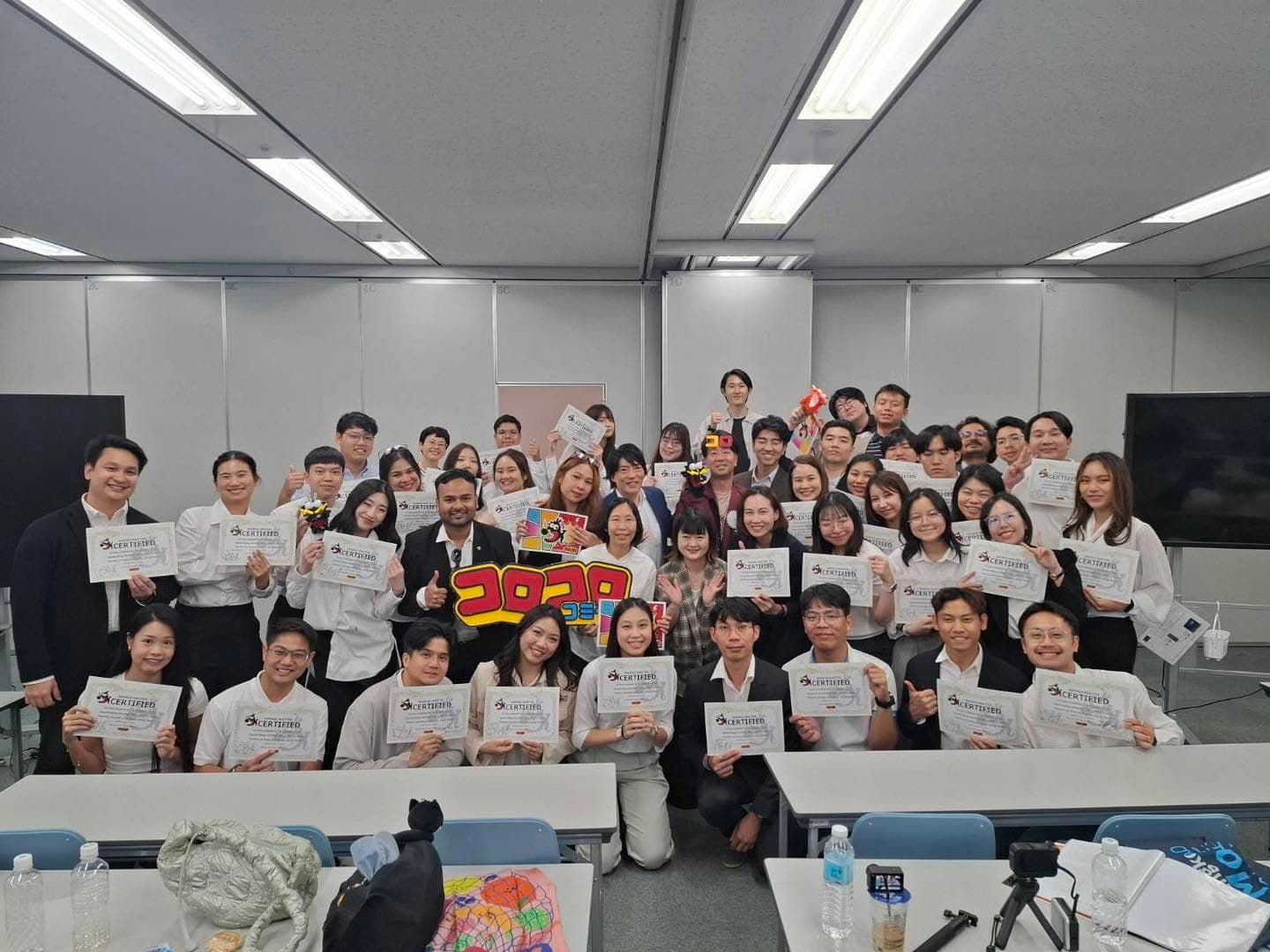
On the second day, our MBA students explored the fascinating world of Japanese content industries through visits to Shogakukan, one of Japan's leading manga publishers and the home of iconic franchises such as Doraemon, Detective Conan, Frieren, and Beyblade.
In the morning, Prof. Masa Ikegami (GLOBIS University) guided students through the business case behind Pokémon's global success. The discussion revealed how Japan's unique "media mix" strategy transformed a Game Boy title into a worldwide phenomenon through manga, anime, trading cards, merchandise, and licensing. Students also learned that global expansion is not simply about exporting content—it requires the right ecosystem, partnerships, and business model.
One key takeaway: global popularity does not guarantee business success. The real value of intellectual property (IP) lies in how it is managed, extended, and monetized across multiple platforms and markets.
In the afternoon, we were honored to learn from Koichi Kobayashi, Deputy Editor-in-Chief of CoroCoro Comic, who shared how listening closely to children's voices has enabled Shogakukan to evolve from an educational publisher into an edutainment company that inspires generations of young readers. He also highlighted how enduring IPs such as Doraemon and Detective Conan continue to create value through innovation, partnerships, and community engagement.
The day concluded with a hands-on manga drawing workshop led by renowned manga artist Koizumi-sensei—an unforgettable experience that brought creativity and business together.
From manga and anime to licensing and global strategy, today's session demonstrated how Japan turns creativity into sustainable business value—and why understanding IP management is increasingly important for future business leaders.
Day 3
In the morning session, MBA students participated in an intensive learning session on Toyota Motor Corporation led by Professor Tomoya Nakamura from GLOBIS University. Students explored why Toyota has become one of the world’s most respected companies, not simply because of its products, but because of the organizational routines, processes, and values embedded deeply within the company. The discussion highlighted key elements of Toyota’s production philosophy, including Just-in-Time production, the Kanban system, and close collaboration with suppliers, all of which contribute to efficiency, quality, and responsiveness.
One of the most important lessons from the session was that Toyota’s strength is difficult to imitate because it is not based only on visible tools or techniques. Rather, it is rooted in tacit knowledge, accumulated experience, shared values, and the ability of people within the organization to continuously learn, improve, and solve problems together. This helped students understand why management systems cannot be copied mechanically; they must be cultivated through people, culture, and practice.
In the afternoon, MBA students visited Shimizu Corporation’s Smart Innovation Ecosystem NOVARE, an innovation platform designed to create the next generation of value for the construction industry and society. NOVARE reflects Shimizu Corporation’s long-term vision, SHIMZ VISION 2030, which aims to transform the company into a Smart Innovation Company by promoting innovation in three key areas: business structure, technology, and talent.
During the visit, students learned how NOVARE functions as an integrated ecosystem that connects several important facilities: NOVARE Hub, NOVARE Lab, NOVARE Academy, NOVARE Archives, and the Former Shibusawa Residence. Each space plays a different role in supporting innovation—from open collaboration and R&D to human resource development, knowledge creation, and cultural learning.
A key learning point from this visit was that innovation does not come only from advanced technology. It also comes from the ability to connect history, people, knowledge, experimentation, and collaboration. Through NOVARE Academy and NOVARE Archives, Shimizu preserves the spirit of monozukuri—the Japanese philosophy of craftsmanship and making things with care. NOVARE demonstrates how a company with more than 220 years of history can use its accumulated expertise as a foundation for creating new solutions for the future.
Day 4 - Final Day of the MBA Study Trip
On the final day of our study trip, the MBA program was warmly welcomed by Fast Retailing, a global leader known for operating multiple fashion brands, including UNIQLO, GU, and Theory.
During the visit, the company provided students with extensive knowledge and hands-on experiences related to its operations, all while emphasizing the importance of creating a sustainable society. This experience offered valuable insights across various global aspects that aligned perfectly with the objectives of our trip.
We extend our heartfelt gratitude to the Fast Retailing team for granting our students the opportunity to learn from such a leading company. We believe this experience will provide life-changing knowledge that will significantly enhance their career trajectories and broaden their perspectives on a global scale.
#MBAChula #MBAChulaGlobalBusinessExperience #MBAEnglish #CBSEL #CBSInter #CBSChula #CBS #ChulalongkornBusinessSchool
Gallery